Egypt Launches the First "Coastal Recovery Walk" in New Damietta: Transforming Shore Protection Structures into a Sustainable Artistic Canvas
In a pioneering and unprecedented achievement, the "Enhancement of Climate Change Adaptation in the Nile Delta and the Northern Coast of Egypt" project has successfully balanced the scales by integrating coastal protection infrastructure with environmental beautification. After 24 months of intensive work, the project's vision has become a reality on the shores of New Damietta, offering a leading pilot model to be replicated across protection structures along the Egyptian coastline.
The core philosophy of this achievement lies in providing effective protection for citizens and infrastructure against the risks of sea-level rise and climate change. This was done in parallel with enhancing the aesthetic appeal of the structures, fulfilling the local community's demands for a more visually pleasing design that harmonizes with the coastal environment. The project delivers protection based primarily on Nature-based Solutions (NbS), adding an attractive natural aesthetic to meet public needs. A comprehensive manual for this sustainable model has already been handed over to the New Damietta City Development Authority, enabling it to apply these guidelines to all nature-based protection works.
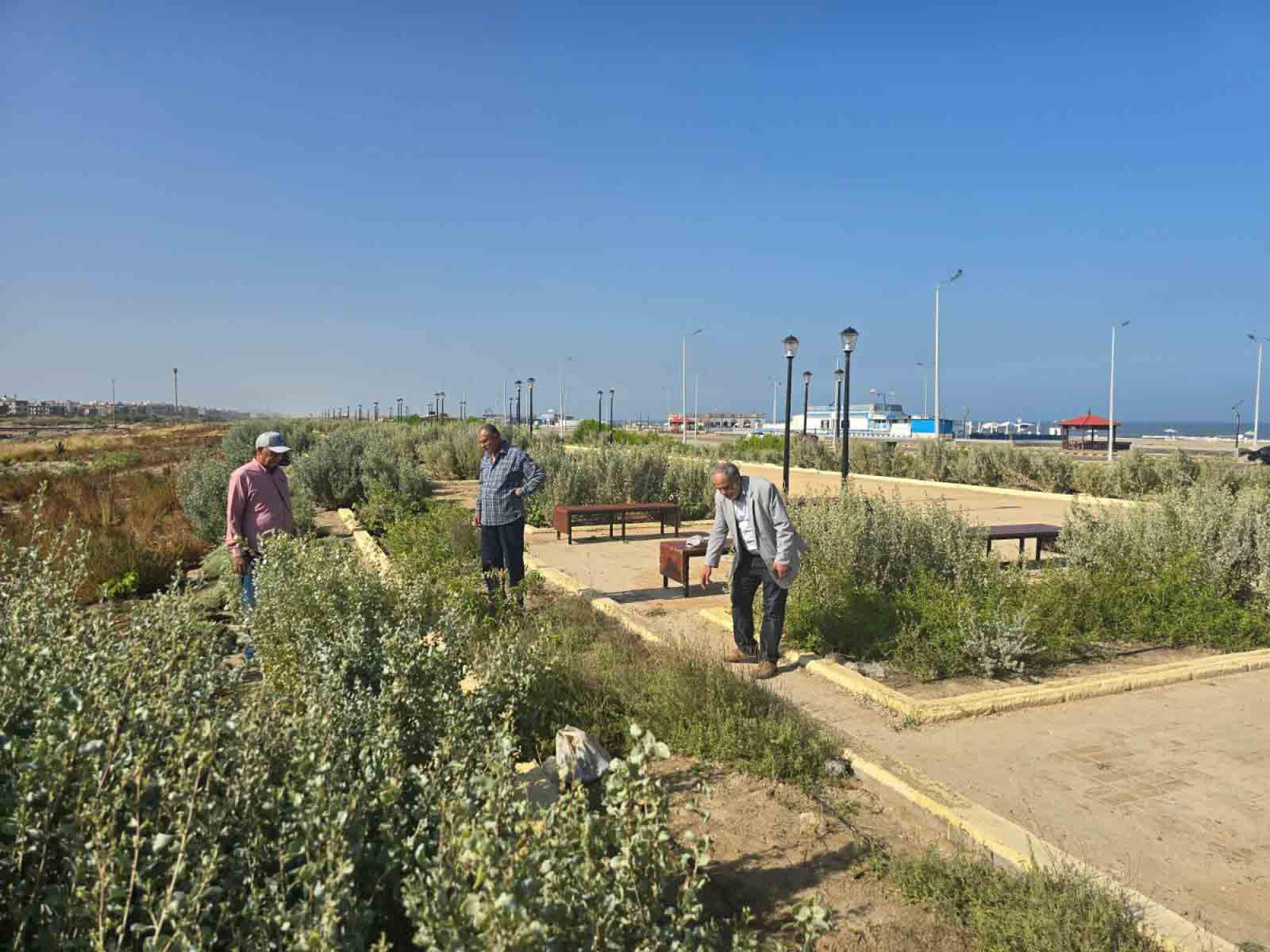
This pilot project, covering approximately 8 acres on New Damietta's beach, focused on utilizing protection works to beautify the shoreline in a manner consistent with the area's urban standards. The landscaping featured the creation of the "Recovery Walk"—an inspiring term proposed by Dr. Nabil El-Hadi, Professor at Cairo University and the project's site coordination consultant. The walk was designed to offer psychological comfort, equipped with seating and night lighting to serve as a recreational space for vacationers and residents.
The greatest challenge was overcoming the harsh climatic conditions of coastal areas to cultivate local flora. Over a 24-month period, more than 30 plant species were tested. The project eventually settled on the 20 most resilient and flourishing species, including aromatic, medicinal, and indigenous plants. This effort aimed to restore biodiversity and create a "living canvas" that blends protection, beauty, and environmental sustainability.
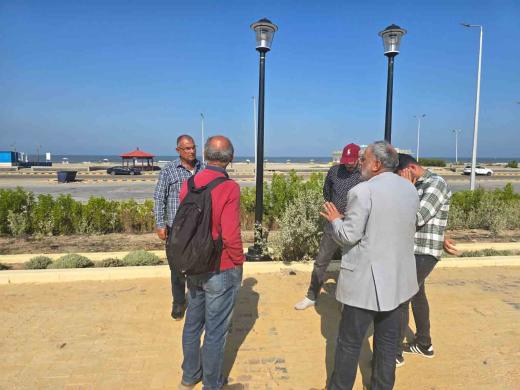
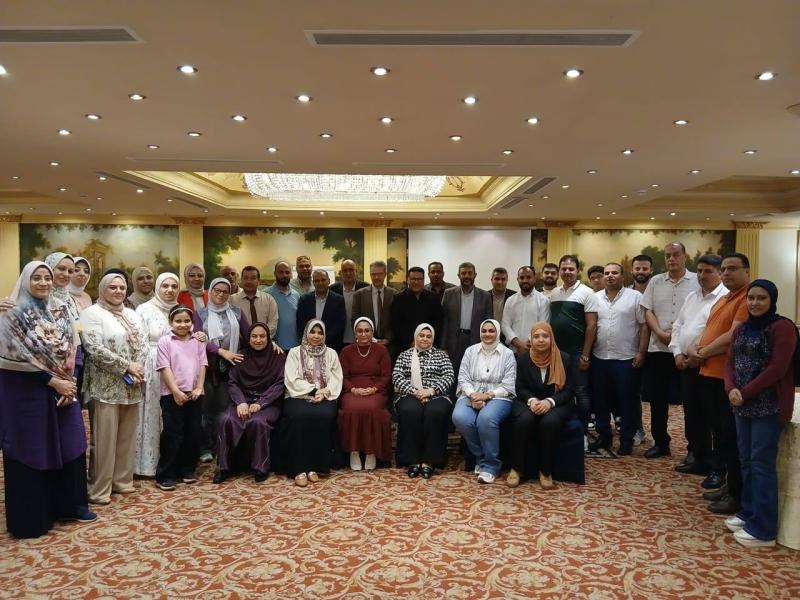
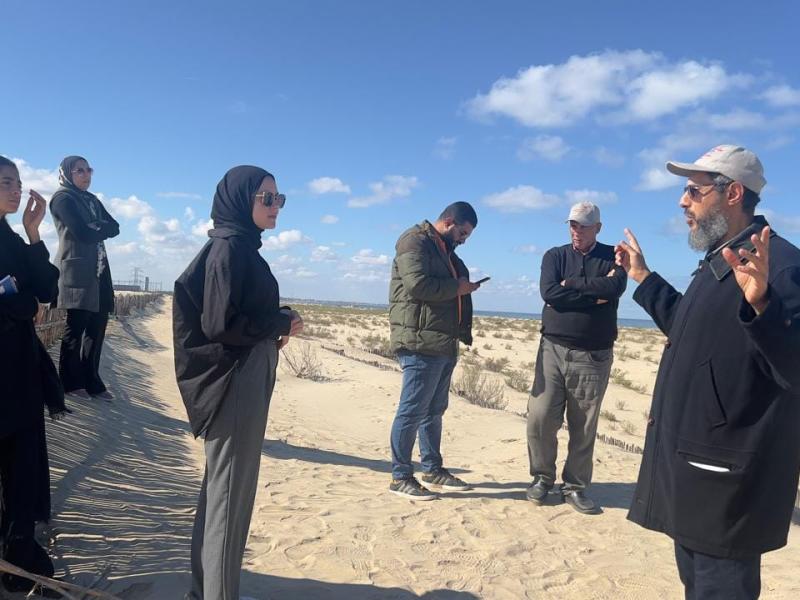
The implemented pilot zone extends for approximately 600 meters. As part of the project’s activities, a technical committee conducted the preliminary handover of the experimental landscaping works. The committee included Eng. Abdel Razek Mohamed (Project Site Engineer), Dr. Mohamed Suleiman (Project Monitoring System Lead), and Dr. Nabil El-Hadi (Project Consultant), alongside engineers from the Egyptian Shore Protection Authority (ESPA): Eng. Mohamed Adel and Eng. Mohamed Fawzy Fahim.