The Institutional Shield for Egypt’s Coasts: The Legal Roadmap for Integrated Management (2025–2100)
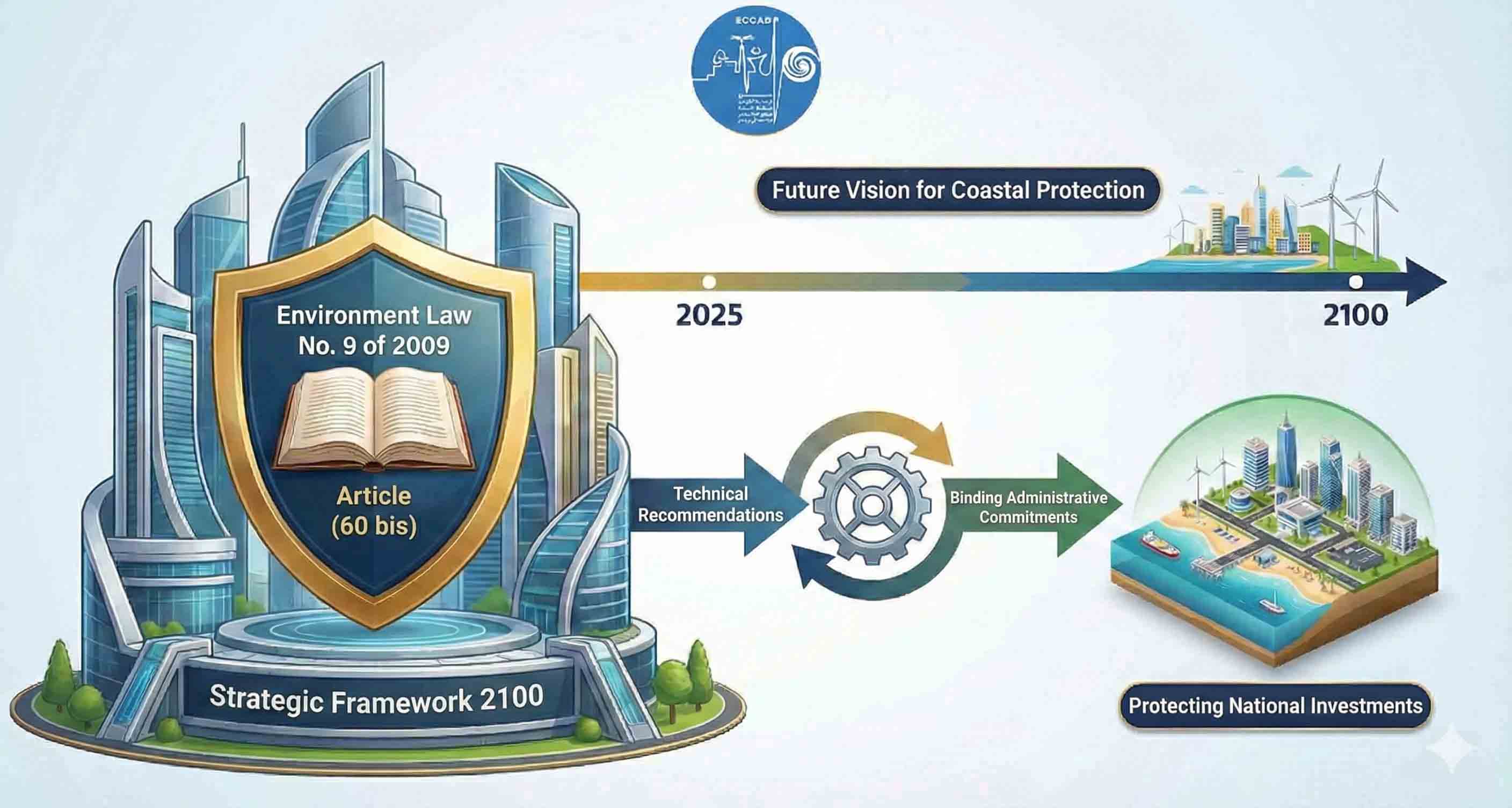
Legal Framework and Long-Term Strategic Vision: The new framework is based on the outcomes of the Integrated Coastal Zone Management (ICZM) Strategic Plan, with a vision extending to the year 2100. The legal authority of this framework stems from the activation of Article (60 bis) of the Executive Regulations of Environmental Law No. 9 of 2009. This transition effectively transforms technical recommendations into binding administrative obligations, aimed at safeguarding national investments against the risks of climate change.
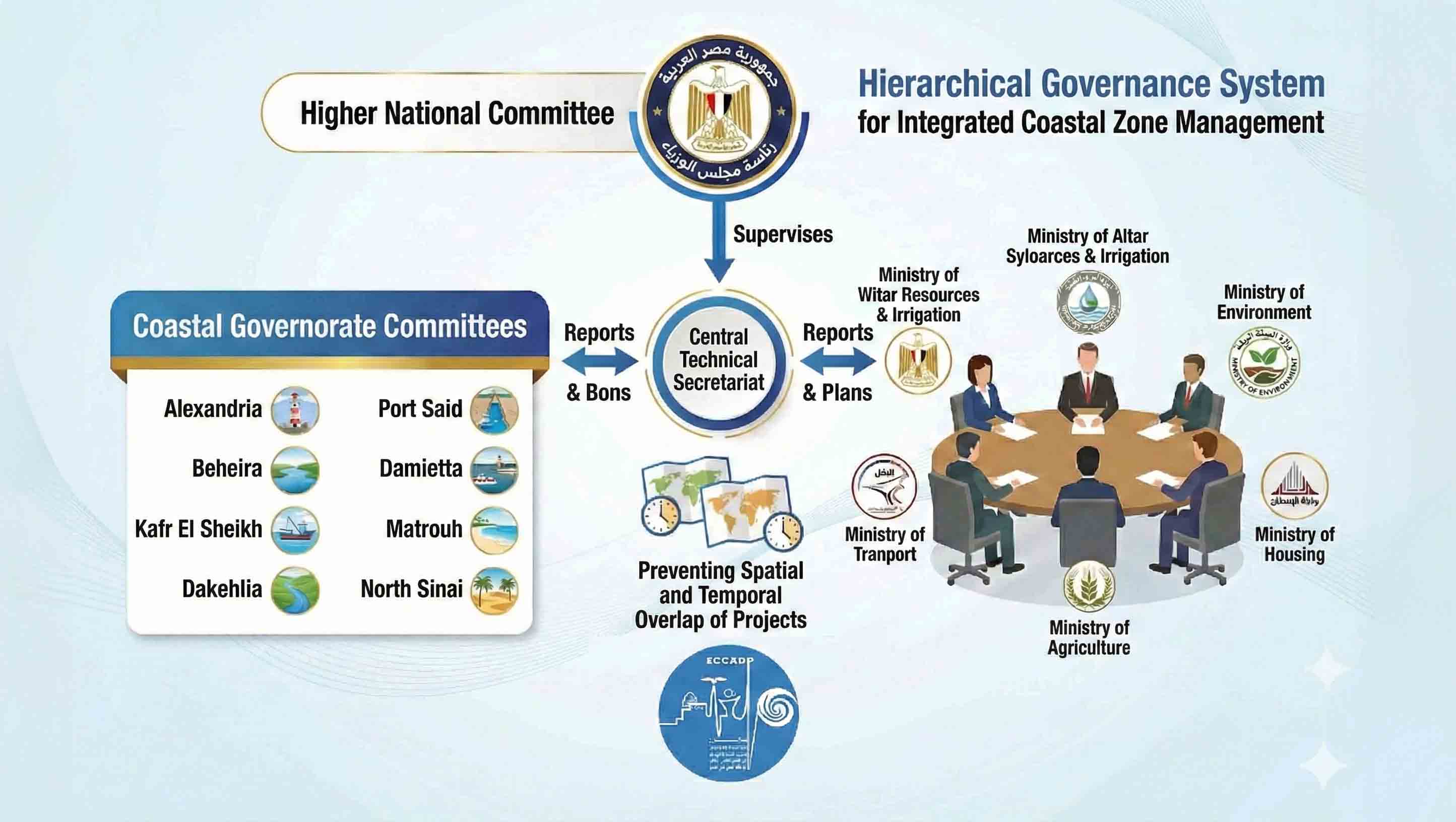
Organizational Structure and Integrated Decision-Making: The framework relies on a 'Hierarchical Governance System' designed to prevent policy conflicts across various entities. This structure initiates at the National Higher Committee, proceeds through the Technical Secretariat, and extends to Governorate-level committees chaired by the Governors. This organizational design is specifically engineered to integrate all relevant ministries (Water Resources & Irrigation, Environment, Housing, Agriculture, and Transport, etc.) into a single unified platform. This ensures the prevention of any spatial or temporal overlaps in developmental projects.
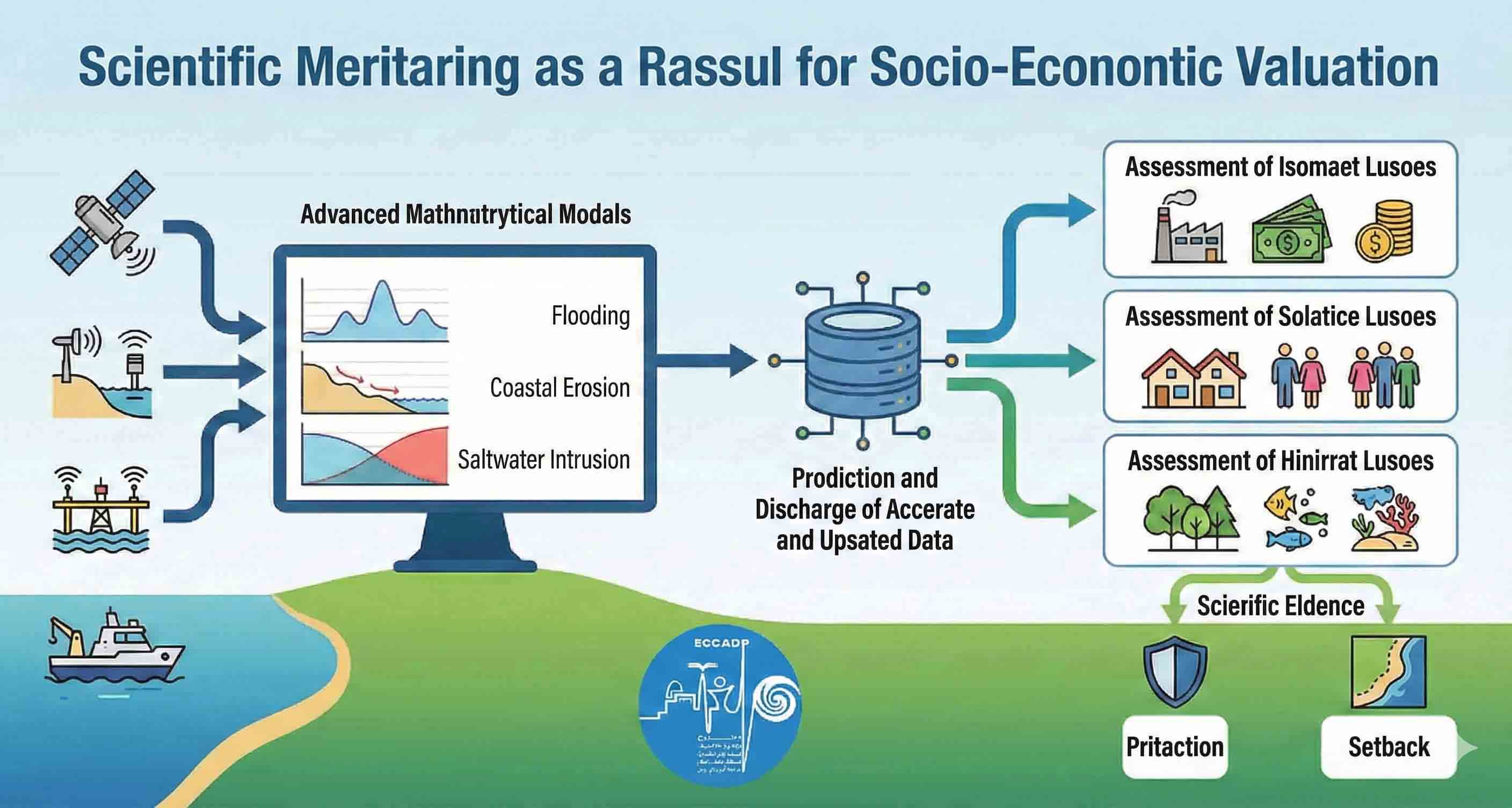
Scientific Monitoring as a Basis for Socio-Economic Evaluation: "The framework transcends administrative procedures by prioritizing the production and dissemination of accurate, up-to-date data. Advanced mathematical models are utilized to monitor floods, coastal erosion, and saltwater intrusion. This enables a precise assessment of potential economic, social, and environmental losses. Furthermore, it allows for the prioritization of protection measures or 'Setback' zones based on irrefutable, evidence-based scientific data.
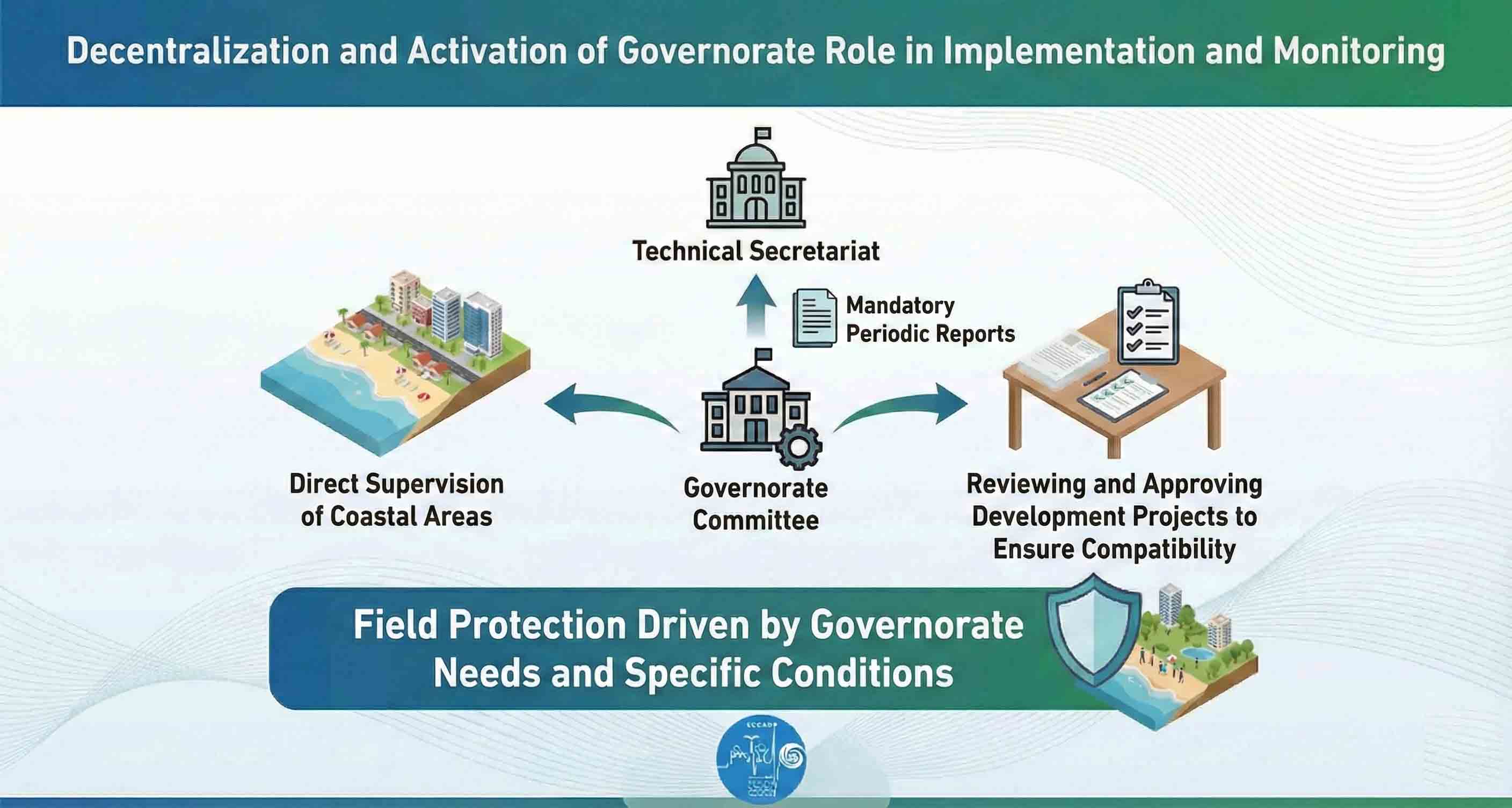
Decentralization and Empowering Governorates in Planning, Implementation, and Follow-up: The framework grants extensive authorities to 'Governorate Committees' for direct oversight of their respective coastal zones. These committees are responsible for presenting and reviewing developmental projects to ensure alignment with the Integrated Coastal Zone Management (ICZM) plan. Furthermore, they are mandated to submit periodic reports to the Technical Secretariat. This structure ensures that on-ground coastal protection is driven by the specific needs and unique geographical conditions of each governorate.